Xiaomi Mi Air 2 SE 24 Hour Review: A Sea Of Wonders, With One Big Problem

The Xiaomi Mi Air 2 SE is finally in our hands, and after 24 hours with it - we have mixed feelings about Xiaomi’s take on a more customisable pair of truly wireless earbuds. While it gets a lot right with its design and sound, one problem prevents it from truly reaching all it claims to be, and makes it hard to recommend.

Good Initial Impressions
IMG_0290.jpeg

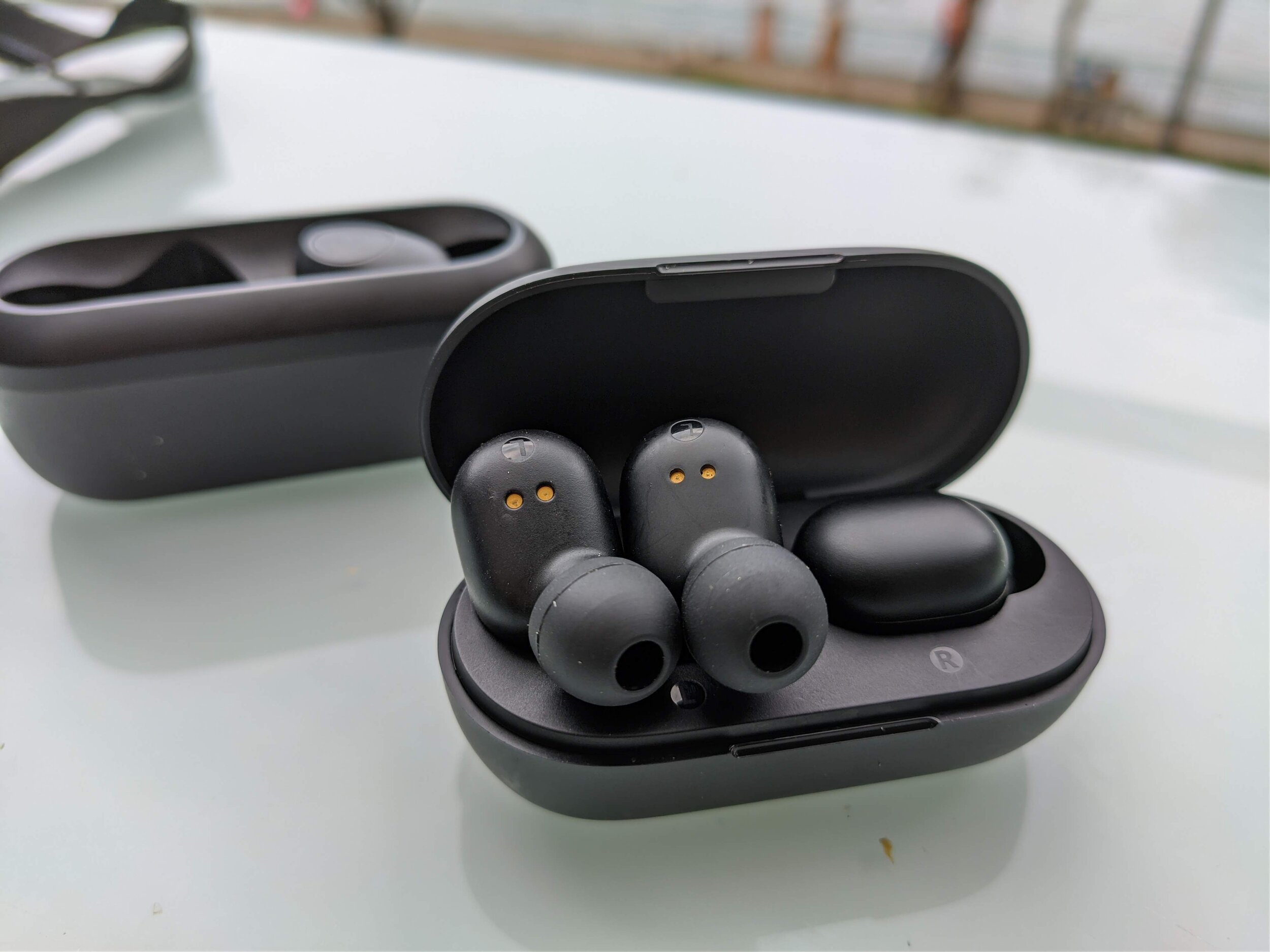
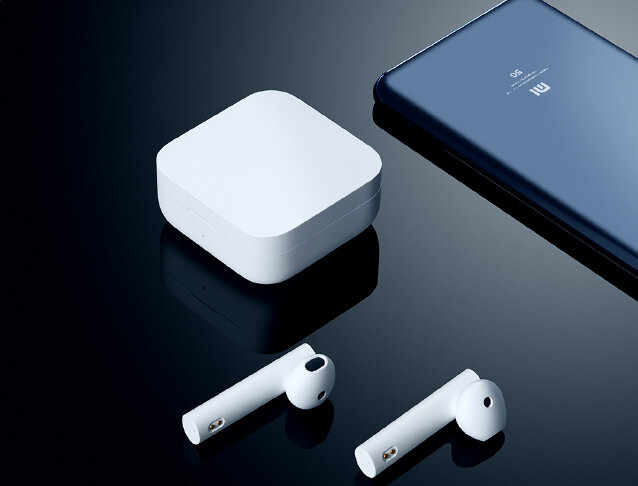
Upon original unboxing, the Xiaomi Mi Air 2 SE doesn’t differ much from the Xiaomi Mi Air 2, and that is a good thing. The packaging is forward and straight to the point, including only the essentials: The earbuds, its case and a USB C cable. While the case itself has a plastic, almost cheap feel, the earbuds itself feel very nice to the hand.

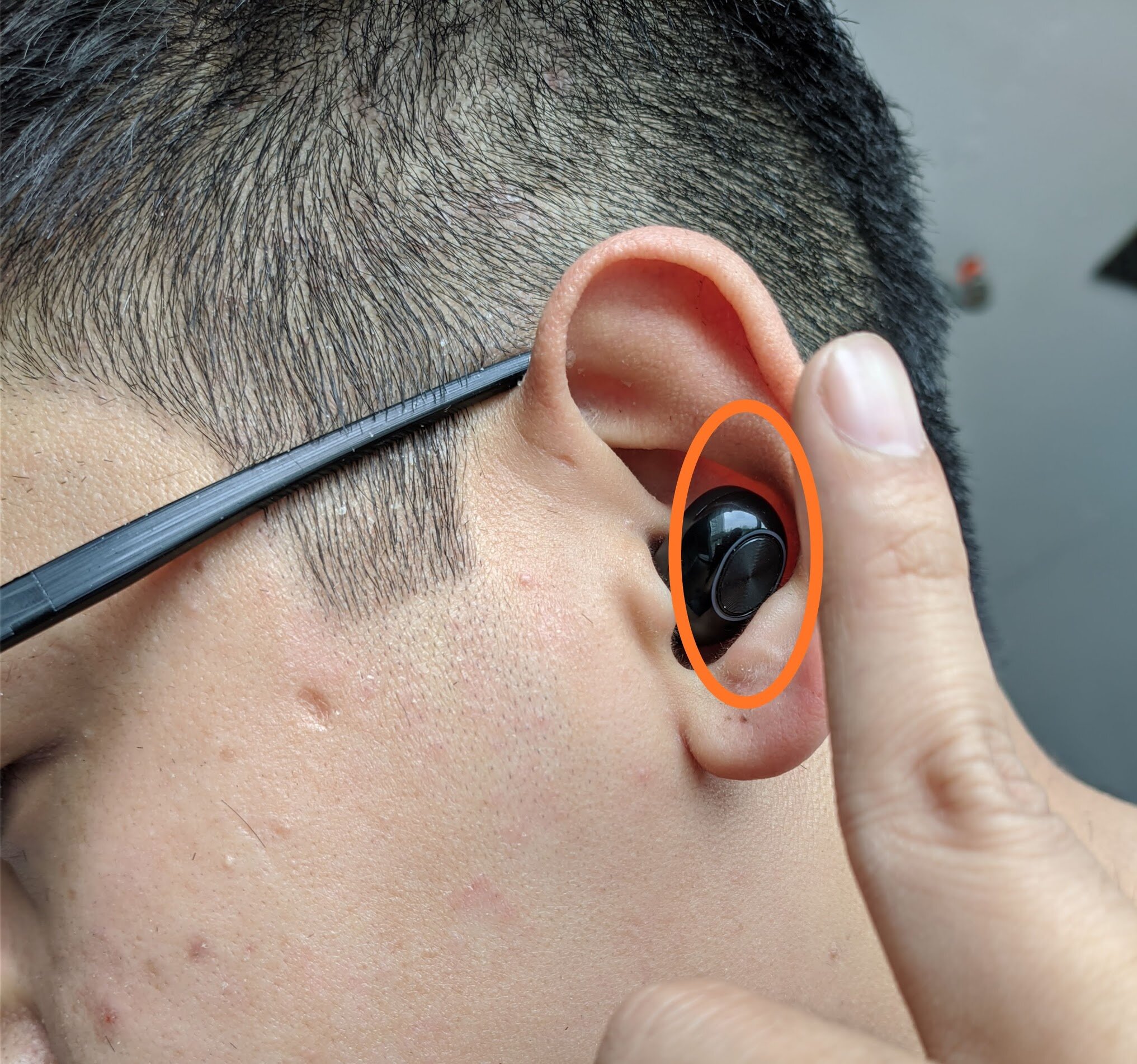
Where its competition like the AirPods go for a short stem, cylindrical design, Xiaomi isn’t afraid to use a large stem with tons of flat surfaces. To the naked eye, this may give the Xiaomi Mi Air 2SE a more brute, industrial design, but upon using the earbud, its design suddenly starts to make sense. The flat edges in specific, allow your finger to instantly identify where to press in order to use touch controls - a wonderful feature that eliminates the awkwardness of mindlessly tapping your earbud hoping for results.

Pairing the earbuds was also a fairly straightforward process. Despite missing the feature from its brother, the Mi Air 2, which would show an AirPods like menu, the Mi Air 2 SE simply uses the good old Bluetooth pairing process. When you’re finally ready to listen, you’ll find a great sounding pair of earbuds, which deliver great performance in almost any genre we could throw at it. We think this sound signature is bound to attract and please more consumers.

For those who see themselves making many calls while wearing these earbuds, our first impressions on this regard are also strong. We did a test while giving an online English lesson, and all students reported that they could hear us very clearly. We will be testing this more outdoors in the upcoming days.

From default, the touch controls are rather limited, and that’s where our biggest issue with this device comes into play..

One Problem

IMG_0289.jpeg

Everything we have said about the Xiaomi Mi Air 2 SE to this point seems fantastic, but it goes wrong in the one area it is supposed to shine in. In Xiaomi’s product page, the Xiaomi Mi Air 2 SE is claimed to be a highly customisable pair of earbuds, using Xiaomi’s own MI AI app in order to make the most of the earbud’s touch controls. Unfortunately, a lot is wrong with this app.

Firstly, the Xiaomi Mi AI app is completely in mandarin, making it impossible for anyone who imports the Xiaomi Mi Air 2 SE and doesn’t speak mandarin to use. Another equally heartbreaking comment is that besides the ability to view your earbud’s and its case’s battery, the current version of the MI AI app doesn’t offer any other ability, even once you have gotten through the language barrier.

What this means is that by paying the full price, you’re not getting the full experience that is advertised. By saving money on a cheaper pair of earbuds, you may get similar audio quality and not be charged extra for features that as of this time, simply don’t work. It is important to keep in mind however that Xiaomi plans to realise this model of earbuds on other territories as the Poco buds, which may include an updated version of the Xiaomi Mi AI that truly delivers on the features it promises.

While the Xiaomi Mi Air 2 SE is a product full of potential, it has one problem that makes it hard to recommend. For those who don’t need the customisation features it falsely advertises however, the Xiaomi Air 2 SE features a clever design and great sound for an excellent price.

Want to watch a video version of this article? Click here

Liked this article? Click here to read more

Why YOU Shouldn't Buy Truly Wireless Earbuds Right Now

You shouldn’t buy truly wireless headphones right now. As much as that statement hurts coming from a truly wireless headphone fanatic, recent development in this industry have unfortunately led this to be the case.

DB1004EB-2350-4C6B-A58D-89C1ABAC6EE1.jpeg

Released a few months ago, the Qualcom 3020 chip set aimed to bring a slew of features that significantly improves the usability of truly wireless headphones:

A much improved mono mode, allowing both sets of truly wireless earbuds to connect individually;

Improved call noise reduction, allowing for your truly wireless calls to be more practical and lastly;

Improved latency, making sure that smartphone gamers or heavy media viewers can use their truly wireless earbuds without missing in on the action!

If this list doesn’t sound especially useful or worth waiting, then go on and purchase a pair of truly wireless earbuds - you can find lots of older pairs on the cheap! But if you’re like us, and could see these set of features impacting the usability of your truly wireless earbuds, then we have some unfortunate news for you: Only a very select few truly wireless earbud producers have brought this latest technology to market, one of our favourite implementations yet being the Haylou GT1 Plus.

What this means for you, the consumer, is that unless you’re informed in what pairs of truly wireless earbuds contain this new technology, buying a pair of truly wireless earbuds right at this moment may include outdated technology that will not give you the best experience possible - simply wait a few months and soon enough, like truly wireless earbuds themselves, this once limited technology will be available at the hands of many for a very fair price!

Want to watch a video version of this article? Click here

Curious about the differences between the Haylou GT1 Plus and the Haylou GT2? Click here

Is the Xiaomi Mi Air 2S TSW Is Worth YOUR Attention?

The Xiaomi Mi Dots weren’t necessarily the best TSW earbuds ever released - leaving us wondering if the Chinese company Xiaomi had peaked after a record-breaking amount of world changing releases. Announced yesterday, the Xiaomi Mi Air 2S TSW could be the company’s return to glory - but will it improve a lot over the already existing Xiaomi Mi Air 2?

Being released at roughly $56, the Xiaomi Mi Air 2S TSW features a lot of spark for your cash. Firstly, Xiaomi revealed that the Xiaomi Mi Air 2S TSW comes with an upgraded dual-core chipset, featuring a new binaural syncrhonous transmission technology - To put it in everyday terms, the Xiaomi Mi Air 2S TSW will better the earbuds’ abilities to synchronize both earbuds during listening, meaning that the Xiaomi Mi Air 2S TSW could potentially feature really impressive latency results.

To further its low latency focus, Xiaomi has included LHDC Bluetooth decoding, Bluetooth 5.0 and a low-latency mode that automatically turns on during use. With both the hardware and software focused on providing a low-latency experience, the Xiaomi Mi Air 2S TSW may be truly remarkable for gamers and content-viewers alike.

gsmarena_002.jpg

In sweetening the deal, the Xiaomi Mi Air 2S TSW also includes support for Xiaomi’s XiaoAI assistent, and a dual-microphone array, ensuring that phone calls and speech recognition will be superb in Xiaomi’s new wireless earbud. Furthermore, the earbuds will feature a 5 hour charge, with up to 24 hours when its new wireless-charging is used to charge it.

But to answer the question raised in the first paragraph, we don’t believe that these differences will be significant enough to sway those who already own the Mi Air 2 to upgrade. Not only does the Mi Air 2 already include the same LHDC decoding, but it can now be found for cheaper, making it the better deal than ever. Perhaps the inclusion of noise cancellation or the Qualcomm 3020 chip could have made the Xiaomi Mi Air 2S TSW a better deal. Nevertheless, the improvements to low-latency await to be seen, and could change this opinion when the earbuds officially launch.

The Xiaomi Mi Air 2S TSW will have a China-exclusive release on April 9, with plans for a release in other countries not in sight.

Are you excited for Xiaomi’s new attempt in the wireless earbud space? Let us know in the comment section below!

Want to watch a video version of this article? Click here

Want to read about how the K30 Pro destroys its competition? Click here

The Tronsmart Spunky Beats Misses what makes Wireless Earbuds Great

IMG_20200310_083606.jpg

Truly wireless earbuds have been growing in popularity in recent years. Much of the hype for bluetooth earbuds after the Xiaomi Mi AirDots. It becomes easy to understand where that popularity for a product like the Redmi AirDots Or Xiaomi Mi Airdots comes from. With the recent release of the Tronsmart Spunky Beats however, it has become evident that some companies simply don’t understand the very appeal with this product category or what makes great bluetooth earbuds great, and what makes mediocre bluetooth earbuds….mediocre.

What Makes Wireless Earbuds Great?

To understand what makes the Tronsmart Spunky Beats a bad pair of earbuds, it is first important to understand what makes wireless earbuds great. After over a year of reviewing these products, we have nailed the appeal of this type of product into a few categories: Convenience, Design and lastly, Usability.

On the Convenience front, truly wireless earbuds must deliver an easy to access audio experience that can be easily portable. It’s important to recognise that users are giving up in a lot of areas when choosing wireless earbuds over their wired counterparts: Battery life, ease of loss and in some cases, audio quality. For this reason, successful pairs of truly wireless earbuds need to be compact - and that comes in both the ear pieces themselves and the carrying case.

As for design - it is pretty self-explanatory. Having unfashionable, or clunky ear pieces makes for an audio experience that often times feels as if it is bringing you down rather than creating the boundless freedom that the concept is known for. On the carrying case side of things, a case needs to strike a balance between size, features and battery life, as lacking any of these features creates a clearly unbalance experience.

Usability, though the last feature we are mentioning, is often what makes or breaks a pair of wireless earbuds. With this category, we make reference to the features packed into a pair of earbuds such as touch controls, charging methods and of course, audio quality itself.

Where the Tronsmart Goes Wrong

the touch panel is making contact with the earl, registering a touch

the touch panel is making contact with the earl, registering a touch

Having identified all that makes a truly wireless pair of earbuds good, now we can identify what makes the Tronsmart Spunky Beats bad: inconvenience of use, poor design and its unusable features - but what’s perhaps worst about these heavy words, is that they all come down to one very poor decision: making the headphones too small. Headphones being too small isn’t something that is unique to the Tronsmart Spunky Beat, but the Tronsmart Spunky Beat is the only pair of headphones that we have tested, that have powered themselves off due to size.

By going on the small end, the Tronsmarts are easy to lose, and are aided poorly by a carrying case that - whilst making the device more portable - give it no real substance. Another aspect to consider about the size of the Tronsmart Spunky Beat that most reviewers won’t notice, the shape of the Tronsmart Spunky Beat means that the headphone doesn’t st in the case correctly. What’s more, by being so incredibly small, the earbuds’ area for touch controls, an important part of this sort of device’s usability, is simply too limiting to be truly usable. What’s worse is that with other user’s sharing their concerns of the Tronsmart Spunky Beats having poor quality control, it leads me to believe that the touch control and touch input of the Tronsmart Spunky Beats could vary greatly.

This brings us to a question that we beg this product’s designers to ask themselves: Why would someone spend the extra money on a wireless pair when it does not include this sort of product’s main selling point: convenience? The main reason our pair of Tronsmart Spunky Beats has been left relatively unused is because of their inconsistent touch response.

As we’ve stated before, consumers are not interested in wireless earbuds because of battery improvements (wired headphones need not be charged and don’t consume as much from your phone’s battery), or even audio quality (despite being very similar, wired headphones can offer more audiophile qualities) - it’s purely for convenience. Want bluetooth headphones with great battery life, incredible microphone performance, and good sound? There are a plethora of neckband headphones such as the QCY L1 which Mitchell uses daily and reviewed here. and with that principle out the window, we feel as if the Tronsmart Spunky Beats simply misses the mark entirely.

Haylou GT1 Plus VS Haylou GT2: Differences that Matter

IMG_20200223_152441.jpg

With so many truly-wireless earbuds now entering the budget sphere, it is becoming increasingly hard to decide which is worth of our money. In our channel, we are strong advocates of the Haylou line of products, as we believe they offer a strong midpoint between value and audio performance. To no surprise however, Haylou has now also fallen victim to the multiple-model issue, which brings us to a core question: Which is worth your cash, the Haylou GT1 Plus, or the Haylou GT2?

IMG_20200223_152802.jpg

Firstly, let’s quickly mention a very important similarity: both of these earbuds sound great, in fact, they are essentially identical. This is important to note, as it means that the differences to which we will discuss will simply come down to preference - meaning that Haylou has essentially created two similar products for two different sorts of consumers.

The out and about customers, are who we believe will much prefer the Haylou GT1 Plus. Featuring a more compact case that packs more juice than its counterpart, as well as a generally lower price in online markets, the Haylou GT1 Plus simply fits into your pocket and becomes one with your outdoors gear.

Meanwhile, those who prefer features over convenience will find the Haylou GT2s a great set of truly wireless earbuds. This mainly comes down to the product’s main selling feature: its charging cable included with the case. By simply lowering a flap, you have essentially reduced the need to bring around one extra cable with you. This comes at the cost of a larger, and less-battery packed case, but we find that to some the added benefit of having an all in one package may be worth it.

Furthermore, those who like physical controls will find no luck with the Haylou GT1 Plus, again going to testify how the Haylou GT2, whilst a larger earbud to bring around, makes up for the inconvenience by packing everything you could ever need from truly-wireless earbuds in one.

IMG_20200223_152658.jpg

To conclude, for those looking for better battery, and a better price of entry, the Haylou GT1 Plus is the obvious winner. But for those looking for out of the box convenience, the better charging case and physical buttons bundled with the Haylou GT2 could very well be a selling point. For our money, go with the GT1 Plus, but everyone’s needs vary, and what is truly important is that no matter your personal pick, you will have a great listening experience.

BUY THE HAYLOU GT1 PLUS ON ALI EXPRESS

BUY THE HAYLOU GT1 PLUS ON GeekBuying

BUY THE HAYLOU GT1 PLUS ON BANGOOD

HAYLOU GT2 ALI EXPRESS

HAYLOU GT 1 AND HAYLOU GT2 ON GEARBEST

HAYLOU GT 2 ON BANGGOOD

Haylou GT2: 5 Things To Love

IMG_20191108_144329.jpg

The Haylou GT2s have just released, and after spending a while using them, we have found a great deal to love about the successor to one of our favourite value buds of last year. With that said, below follow simply 5 of those reasons:

A Value Beast

With most of the consumer market finally coming to accept that Bluetooth earbuds were an idea for the better, major tech companies have been quick to produce fantastic, but unfortunately also fantastically expensive audio experiences. The Haylou GT2s however, come at under $20, making them not only a viable option for every tech consumer, but one that can be easily replaced without breaking the bank.

IMG_20191108_112418.jpg

Small and Compact

Unlike most modern wireless earbuds, which take the gen 1 AirPods toothbrush design, the Haylou GT2 feels like a very minimalistic piece of technology. If to be described to the everyday person, I’d go as far as saying these are one of those earbuds that can simply disappear in your ear when you wear them, making them perfect with just about every outfit.

Long Lasting Fun

Part of the massive convenience of Bluetooth earbuds is the ability to use them away from your phone. When your battery doesn’t last however, this convenience can then become an awful disturbance - thankfully, this is no problem for the Haylou GT2. After using them with medium volume for about 2 and a half hours, our Bluetooth settings told us that we still had 50% charge on the earbuds themselves, meaning you can expect at least 4 to 5 hours of pure listening experience.

00000IMG_00000_BURST20191116124259720_COVER.jpg

A Better Case

As some may remember, our experience with the original Haylou GT1s were not very pleasing, with our case breaking in the very first day. With their successors, we are happy to say that we feel more confident that the case will stand the test of time this time around.

Just as great is the fact that this case now comes with a built in charger, allowing you to easily and quickly charge your earbuds in the event that they do ever need more juice.

Button Controls

Another major complaint that we had with the first gen Haylou earbuds were their less than superb touch controls. But with the new button controls, that problem has since been fixed. While they weirdly enough exclude the ability to control volume, they offer a more than sufficient method change your tracks without having the terrible feeling of pushing the earbuds into your ears.

There’s much more to love about the Haylou GT2s, but we hope that these 5 reasons may be enough to keen your interest in what just may be our new favourite value king of 2019.