RealMe GT Banned From Antutu, But What Does That Mean For Buyers

Realme-GT-5G.jpg
realme-gt-5g-1_600x1066.jpg
Realme-gt-antutu-0-566x1200.jpg.png

The RealMe GT has been caught cheating on its Antutu benchmarking application and the implications of that are huge. Specifically the because before the RealMe GT was announced RealMe published their Antutu Results prior to launching the device. Lets examine why the RealMe GT cheating scandal is such a big deal, how Antutu discovered the RealMe GT was actually cheating, and finally what this means for consumers.

Before we can dive into this subject thought, lets discuss what is Antutu and why the RealMe GT cheating is such a big deal. Antutu is a popular benchmarking platform used to test the computational performance of a device. Antutu test several different components and several different processes that most mobile phones have to do. Antutu will test the multi-threaded performance for applications that have to do a lot of little tasks. An example of this could be autocorrect on a notes or messaging application. When composing a message the software is constantly checking the text that has been inputted for spelling errors grammatical mistakes or other such things. On the other hand single core performance is meant for one task that takes a lot of computational power. an example of this could be rendering a video out of your favorite gallery application or in a mobile application such as Adobe Premiere Rush. In this instance our single core needs to ramp up to the highest frequency possible to complete one complicated set of tasks. This is obviously an oversimplification and applies specifically to the RealMe GT cheating in Antutu benchmarks.

The RealMe GT is currently the cheapest phone with the Snapdragon 888 CPU offered by RealMe. This means that the real me GT is aimed squarely at people trying to get the most computational horsepower for the cheapest price. A phone like this would probably be popular with mobile gamers or people that don't care about what a device is actually like to use and people who focus specifically on benchmarks as a measuring tool for which device to buy. This means for many people the Antutu score of the RealMe GT versus the price of the device is a huge deciding factor. RealMe cheating this benchmark could be the deciding factor between buying, and not buying a device.

Next, let's discuss how Antutu discovered that the RealMe GT was actually cheating. This information comes directly from Antutu's Weibo post that had declared the RealMe GT was actually cheating. Antutu discovered that during the multicore benchmark the system was intercepting threads meant for the lower powered cores and scheduling them for the higher power high performance cores. It's unlikely that this is some type of high performance mode or mix up on the RealMe GT for a few reasons. First is that if the RealMe GT had this hidden high performance mode that was regularly being activated than gaming and even high stress tasks would destroy battery life. Second, although sending the multi threaded workload to the most powerful core would increase performance it undermines the entire point of having these multicore CPUs. This gives us a good indication that RealMe specifically found a way to inflate it's Antutu benchmark scores prior to launch.

Finally what does Antutu's banning of the RealMe GT mean for consumers. Well very little frankly. The RealMe GT was a device made for keyboard warriors and gamers looking for the highest score. This Antutu score has very little impact on what these devices are actually like to use on a daily basis and serve more as a bragging rights for their perspective buyers. The RealMe GT being banned from Antutu simply goes to show that hile companies like apple use their conflated numbers to sell devices its not apple alone.

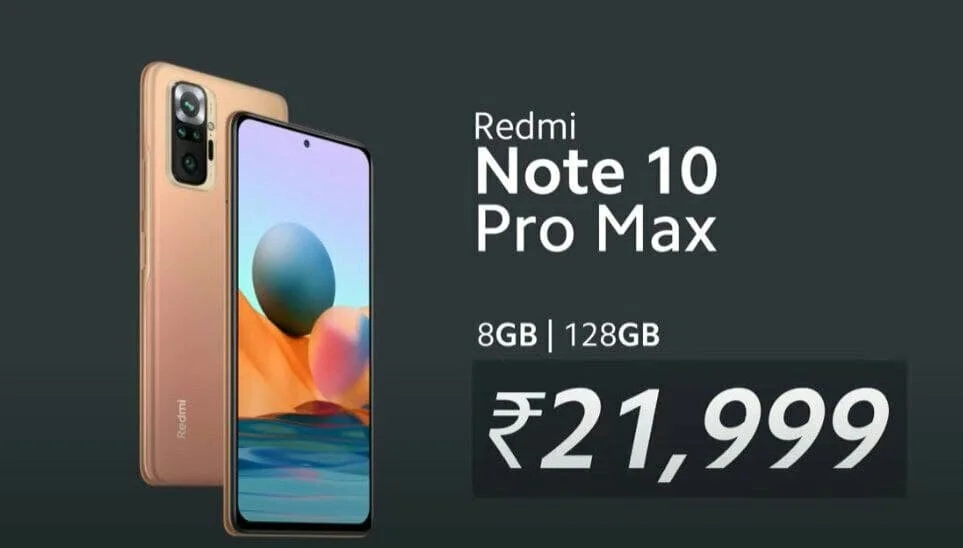
Redmi Note 10 Pro Max Is The TRUE Flagship Killer, Not The Redmi K40 Pro

Redmi has recently released the Xiaomi Redmi K40, Redmi K40 Pro, and Redmi k40 Pro Plus. Amongst the release of the Redmi K40 Pro for China, Redmi is getting ready to release a phone that is likely to destroy the Redmi K40, Redmi K40 Pro, AND Redmi K40 Pro Plus... for the average consumer. See the thing that Redmi left out about the Redmi K40, Redmi K40 Pro, and Redmi K40 Pro Plus, is that they are plastic, and they are recycling the camera from the Redmi Note 9 Pro 5g and the cameras from the Redmi Note 10, Redmi Note 10 Pro, And Redmi Note 10 Pro Max.

We have to talk about plastic, because the Redmi K40 Pro being plastic ISN'T a bad thing. But we need to consider how the Redmi K40 Pro is being advertised and being promoted. In the past, the Redmi K20 Pro was called the K20 because it stood for Flagship Killer 2.0.

photo-1-1557982947998480584304.jpg

Which at the time the Redmi K20 Pro was an unmatched value for the dollar. The Redmi K30 Pro was released later and this was sold as the Poco F2 Pro in quite a few markets. The Poco name harkens back to that of the Poco F1 Pro aka the original "OG" flagship killer. To make matters worse, we already have evidence of one of the devices released, although the Redmi K40 is an unlikely choice, that the Redmi K40 Pro or the Redmi K40 Pro Plus will be released as the Poco F3 Pro.

It seems like in the haste to fill every niche in the market with a phone from the Redmi K40 lineup that Redmi has completely forgotten what a "flagship killer" actually was. Instead the Redmi K40, Redmi K40 Pro, and Redmi K40 Pro Plus are now Xiaomi's budget gaming phones. In order for the Redmi K40 Pro to be a "flagship killer" the Redmi K40 Pro, or even the Redmi K40 Pro Plus need to address the biggest flaw since it's inception. Part of the reason people buy flagship phones is because they have flagship cameras and flagship battery life.

This is ultimately where the Redmi K40 Pro and Redmi K40 Pro Plus absolutely fall flat on their face and fail. At the time of release of the Poco F1 the Poco F1 had a flagship camera and performed well as you can see here. On top of that Poco was great about adding features like 4k 60 after the fact as you can check out in a video here. In fact the Poco F1 camera wasn't only a flagship in it's features, the flagship Xiaomi devices the Poco F1 was released, Xiaomi Mi 8, had the same camera sensor.

This is where the Redmi Note 10 Pro creates a massive problem for the Redmi K40, Redmi K40 Pro and Redmi K40 Pro Plus. See in many ways Redmi is launching the Redmi K40, Redmi K40 Pro, and Redmi K40 Pro Plus on the legacy of devices that were bonafide value kings with an aim at giving people a great all around device. Unfortunately, the king of value and overall "great experience for the price" can't go to the Redmi K40, Redmi K40 Pro, or Redmi K40 Pro Plus, the new king is the Redmi Note 10 Pro.

First we can start at the display of the Redmi Note 10 Pro and how it's likely to compare to the display of the Redmi K40 Pro. It's been confirmed that the Redmi Note 10 Pro Max is going to be shipping with a 120hz AMOLED display. If that sounds similar to the display of the Redmi K40 Pro, it's because it is. Redmi decided to give the Redmi K40 Pro a Samsung E4 display. The Redmi K40 Pro display is one of the standout flagship features of the Redmi K40 Pro, Poco F3 Pro. But if the Redmi Note 10 Pro has a slightly lower quality 120hz AMOLED display how many people are going to actually be able to tell the difference. What's more, is the small difference in display going to dissuade that many people away from buying a Redmi Note 10 Pro compared to the Redmi K40 Pro?

photo_2021-03-04_14-30-56.jpg


Next we might as well talk about batteries as this was an area all the Redmi K phones, K20 Pro, K30 Pro, and Poco F1 excelled. The Redmi K40 Pro is packing a smaller battery than the Redmi K30 Pro. It wouldn't be that big of a deal if the Redmi K40 Pro charged faster than the Redmi K30 Pro. But it doesn't. The Redmi K40 Pro has the same 33W charging tech as Redmi K30 Pro. Now there is nothing wrong with Xiaomi's 33W charging unless you live in a hot climate as you can watch in this video. The only real issue with the Redmi K40 Pro's charging is that it's got a smaller battery, more power hungry CPU in the Snapdragon 888, and significantly more power hungry 120hz display. This means that under most circumstances your battery experience is going to be worse on the K40 Pro than on the K30 pro. Meanwhile the Redmi Note 10 Pro is going to destroy the K40 Pro and Redmi K40 Pro Plus in battery experience. The Redmi Note 10 Pro is going to pack a 5000Mah battery, more power efficient CPU, and the SAME 33W charging found the the Redmi K40 Pro and Redmi K40 Pro Plus.

photo_2021-03-04_14-19-46.jpg
gsmarena_003.jpg


Next is my favorite topic, cameras. This is another place that Redmi screwed the Redmi K40, Redmi K40 Pro Plus, And Redmi K40 Pro. The Redmi K40 is going to be using the Sony IMX 582, the sensor that is in the now 2 year old Redmi K20 Pro. The Redmi K40 Pro isn't much better. The Redmi K40 Pro is giving you the IMX 686, which if that sounds familiar, the IMX 686 is the sensor from the Redmi K30 Pro which did well in my comparison to the K20 Pro which can be watched here. The Redmi K40 Pro Plus is giving you a slight upgrade with the Samsung HM2 108MP sensor. This a great sensor but its not paired with OIS meaning youre video stabilization is going to be greatly effected by low light and low light photography is basically out of the question. What's more is if youre not a smartphone photography enthusiast the lack of OIS is gonna make it difficult to get good images in poor lighting. On top of this you can get the same Redmi K40 Pro Plus Camera in the Redmi Note 10 Pro Max.


Does the Redmi Note 10 Pro Max having the Redmi K40 Pro Plus camera make the Redmi K40 Pro Plus a WORSE device? No, not at all, but it does show us something very clear. From the choices Redmi made when designing the Redmi K40, Redmi K40 Pro, and Redmi K40 Pro they don't care about average consumers. Redmi wants the K40 Pro and Redmi K series lineup to be bought by gamers and people who's singular focus is performance. Is there anything wrong about the K40 Series being aimed at performance? No, not at all, but if you measure the value of a device in more than just FPS in gaming this device isn't for you.

The device for you is the Redmi Note 10 Pro Max. The Redmi Note 10 Pro Max is set to make more reasonable compromises and the Redmi Note 10 Pro Max is likely to give you 80% of the user experience while saving you a ton of money and ultimately giving you more features you care about at that price point.

MIUI 12.5 What Devices Will Get Upgraded?

Xiaomi has recently released the MIUI 12.5 beta for a variety of devices. MIUI 12.5 is set to be lighter than MIUI 12. What does a lighter MIUI 12.5 mean for users? MIUI 12.5 promises a variety of improvements compared to MIUI 12 and most importantly MIUI 12.5 is supposed to be faster and less resources and most importantly MIUI 12.5 is supposed to be faster on older devices.

Along with MIUI 12.5 being faster and more efficient MIUI 12.5 brings new animations and a cleaner more unified animation engine to apps. Although the animations of MIUI 12.5 are different a lot of what's changed is under the hood. MIUI 12.5 in my experience has been a performance improvement on my device and all of the new animations with MIUI 12.5 do feel better and more improved. Although MIUI 12.5 feels better and smoother a lot of things could contribute to a better or worse MIUI 12.5 experience.

A lot people want to know which devices will be getting MIUI 12.5 and which devices getting MIUI 12.5 are going to be MIUI 12.5 based on android 10 and which devices getting MIUI 12.5 will be based on android 11. I have compiled a list of devices from various sources which should be getting MIUI 12.5 and which of those devices getting upgraded to MIUI 12.5 will be based on android 11 and android 10.

MIUI 12.5 update eligible devices

D05AB2D9-6A4E-0BE2-8B61-C2CC55B9B1C2.jpg

Eligible Redmi phones:

– Redmi 7A
– Redmi 8A
– Redmi 8A Dual / Pro
– Redmi 8
– Redmi 9A

– Redmi 9AT
– Redmi 9i
– Redmi 9C
– Redmi 9C NFC
– Redmi 9

– Redmi 9 (India)
– Redmi 9 Prime
– Redmi 10X 4G
– Redmi 10X 5G
– Redmi 10X Pro

– Redmi Note 7
– Redmi Note 7S
– Redmi Note 7 Pro
– Redmi Note 8
– Redmi Note 8T

– Redmi Note 8 Pro
– Redmi Note 9
– Redmi Note 9S
– Redmi Note 9 Pro (India)
– Redmi Note 9 Pro (Global)

– Redmi Note 9 Pro Max
– Redmi Note 9 4G (CN)
– Redmi Note 9 5G
– Redmi Note 9 Ultra
– Redmi K20

– Redmi K20 Pro
– Redmi K20 Pro Premium Edition
– Redmi K30
– Redmi K30 5G
– Redmi K30 5G Racing Edition

– Redmi K30i 5G
– Redmi K30 Pro
– Redmi K30 Pro Zoom Edition
– Redmi K30 Ultra
– Redmi K30S Ultra

Eligible Mi phones:

708323730.jpeg

– Mi 8
– Mi 8 Pro
– Mi 8 Under Display Edition
– Mi 8 Explorer Edition
– Mi 8 SE

– Mi 8 Lite
– Mi 9
– Mi 9 Pro
– Mi 9 Pro 5G
– Mi 9 Explorer Edition

– Mi 9 Lite
– Mi 9 SE
– Mi 10
– Mi 10 Pro
– Mi 10 Ultra

– Mi 10 Lite
– Mi 10 Youth Edition
– Mi Note 10
– Mi Note 10 Pro
– Mi Note 10 Lite

– Mi CC9e
– Mi CC9
– Mi CC9 Pro
– Mi 9T
– Mi 9T Pro

– Mi 10T
– Mi 10T Pro
– Mi 10T Lite
– Mi Mix 2S
– Mi Mix 3

download.jpg

Eligible Poco phones:

– Poco F1
– Poco F2 Pro
– Poco X2
– Poco X3
– Poco X3 NFC

– Poco M2 Pro
– Poco M2
– Poco C3
– Poco M3

Redmi K30 Pro & GCam VS Xiaomi Mi 10 & Gcam

The Important Stuff

  • Along with that the Xiaomi mi 10 is running gcam with this XML file

  • The Poco F2 Pro, Redmi K30 Pro is running Urnyx05 7.3 build from 20/06/2020 You can download Gcam for the K30 Pro, Poco f2 pro HERE

How They Were Tested

Testing gcam on the poco f2 pro, gcam on the redmi k30 pro and gcam on the mi 10 were done quite simply. In order to simulate how most users would. All photos were snapped without tapping on a specific area unless noted. The xiaomi mi 10 and Poco f2 pro had the same gcam set up. HDR with the maximum number of exposures and no other tweaking beyond that.

Poco F2 Pro // Redmi K30 Pro

Poco F2 Pro // Redmi K30 Pro

Xiaomi Mi 10

Xiaomi Mi 10

Poco f2 Pro and Gcam

Poco f2 Pro and Gcam

Xiaomi Mi 10

Xiaomi Mi 10

Poco F2 Pro & Gcam

Poco F2 Pro & Gcam

Xiaomi Mi 10 & Gcam

Xiaomi Mi 10 & Gcam

Poco F2 Pro And Gcam

Poco F2 Pro And Gcam

Mi 10 and Gcam

Mi 10 and Gcam

Tronsmart Onyx Ace: The best Earbuds you Have Never Heard Of

With big name manufacturers putting no end to the release of expensive truly wireless earbuds, Xiaomi has gained attention for its Xiaomi Mi Air 2 SE - but unfortunately, while they were cheap, they were not great. Now, with the release of the Tronsmart Onyx Ace, we finally have hope that consumers can get a solid listening experience without breaking the bank.

You may have never heard of Tronsmart, but upon first impressions with the Onyx Ace, you may feel like they’ve been in this game for a while. With a glossy finish, and a compact form factor, the Onyx Ace not only feels more premium than the Xiaomi Mi Air 2 SE, but more substantial. Coming from an entirely plastic-made build, this is a very welcomed change that may make customers feel as if they have gotten their money’s worth.

Tronsmart-Onyx-Ace-featured.jpg

But the premium design isn’t limited to the earbuds themselves, as the same rules apply to the case that will be keeping your earbuds powered and secured on the go. Not only does the Tronsmart deliver in the looks, even offering extremely affordable cases that give the product an extra bit of flair, but minor touches such as ta battery charge indicator goes a long way too.

Besides looking better, the Tronsmart Onyx Ace also delivers in the sound department. Upon letting our self-proclaimed audiophile friend test both, he surmised his experience the Xiaomi Mi Air 2 SE as “Something I’d thank you for giving me, but then instantly put in the sock drawer,” but the “lifelessness” he identified with the Air 2 SE is not a problem for the Tronsmart Onyx Ace. Delivering “Rich” and “distinct” sound, users can expect to fully enjoy their songs with less obvious compromises.

Tronsmart+Onyx+Ace+review.jpg

Yet even as the Xiaomi Mi Air 2 SE may seem clearly defeated, the Tronsmart Onyx Ace come for the last punch in the functionality department. With a full range of controls from playback, volume and voice assistant without the need of any apps, the Tronsmart Onyx Ace is perfect for just about anyone right out of the box. The same cannot be said with the Xiaomi Mi Air 2 SE, which promises customisation through an app that to this day still does not exist.

With the release of the Xiaomi Mi Air 2 SE, our hopes of having a cheap, equally capable pair of truly wireless earbuds as those made by bigger brands was nearly dead, but the Tronsmart Onyx Ace not only refills these hopes - it sets a new standard on how budget truly wireless earbuds should be.

Did you enjoy this article? Watch a video review here

Would you like to buy the Tronsmart Onyx Ace for yourself? Click here for a great deal

The OnePlus Buds Reach High but Disappoint

With the release of the One Plus Nord, the company has once again generated a lot of excitement for the brand. Along this wave of hype, the company has decided to release its own take on the widely popular Airpods - but the end result isn’t only slightly underwhelming, but it also goes against the company’s “value first” philosophy.

Before criticising the product, here are some aspects that we think the OnePlus buds shine: The company has maintained its beautiful design language with this product, the ability to automatically pair with any OnePlus device is definitely convenient, and lastly, the inclusion of IPX4 should leave those who buy this product as an exercise companion fairly pleased.

152315-headphones-news-oneplus-true-wireless-earphones-to-be-called-oneplus-buds-image1-xzkuuqdvrf.jpg

With that said, despite having a few fundamentals done well, OnePlus missed the mark on a few more noticeable parts of the overall experience. Most importantly, with a custom chip powering the device, OnePlus has managed to not only miss the powerful audio and latency controls that are usually offered by Qualcomm, but it also excluded the wealth of touch controls seen in other cheaper offerings.

With just average audio and the lack of touch control, the OnePlus Buds experience suffers severely. At the price range, users may expect a way to customise their controls through a companion app, or to be able to double tap their earbuds for pause and play controls - unfortunately, unless you currently own a OnePlus device, neither of these things are possible, and even if you do have a OnePlus device, the software update that brings you this companion app has not yet been released!

With this lack of control, and not enough features to make OnePlus owners feel like they are getting an amazing device that is made for them, we are left wondering if this device truly matches the company’s philosophy. For a manufacturer that has garnered so much attention for including the best specs for a low price, this pair of earbuds seems like a failed attempt to get consumers to spend more on what’s ultimately less.

If the company aims to ever release a second generation buds, taking a look at Samsung’s offering, the galaxy buds, could help OnePlus solve a lot of the problems this device presents. Whether you own a Pixel or a Xiaomi device, the Samsumg Buds allow you to download a comprehensive app that can make the best use of your new earbuds. If you own a Samsung device however, you get extra access to a low latency and better audio mode that truly takes the Galaxy Buds experience to the next level. This easy inclusion not only makes the Galaxy buds the superior device for any smartphone owner, but it also gives Samsung owners just enough additional features to make them feel as if their loyalty is justified.

OnePlus-Buds-Pods-black-leak-scaled.jpg

For 109 Canadian dollars, the OnePlus Buds are a well designed, exercise proof set of truly wireless earbuds that struggle to take the experience to the next level. With more customisation options, and a better usage of audio chips already available on the market, OnePlus could potentially release a second generation product that could truly match the company’s long established value first philosophy.

Will you be purchasing the OnePlus Buds? Let us know in the comments below

To watch a video version of this article, click here

To read an article on the OnePlus Nord, click here