3 Reasons Why Xiaomi’s Security Concerns Should Not Matter to You

Ever since the arrest of Huawei’s Meng Wanzhou last year, there have been many worldwide concerns regarding Chinese technology. At the heart of these concerns is Xiaomi, a Chinese company known for selling inexpensive products, and one that has recently openly confessed to collecting user data. With all of this in mind, here are three reasons we think any of these security concerns are simply not worth worrying about.

Spec to Price Ratio
IMG_0261.jpeg

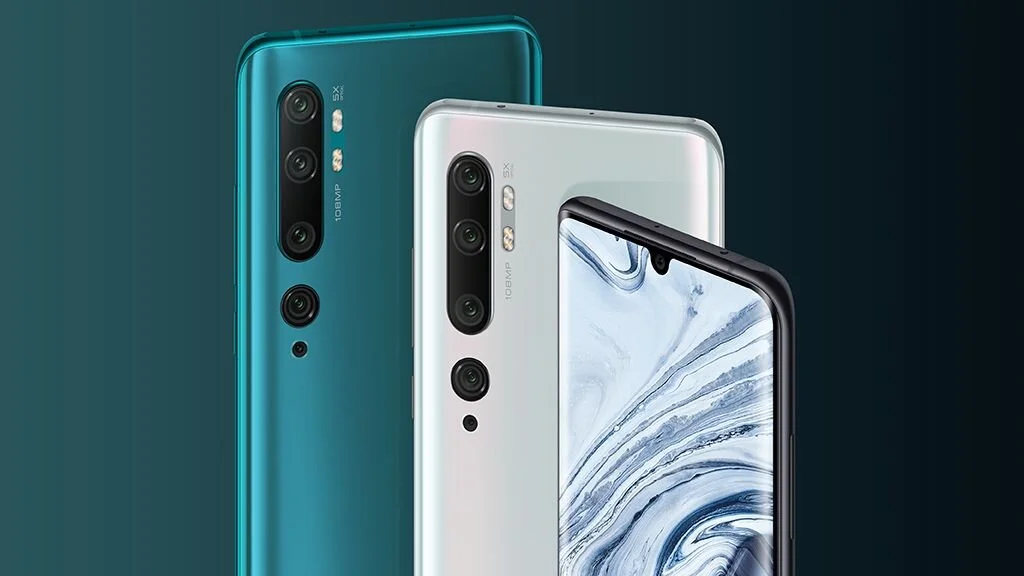
When purchasing a Xiaomi phone, you’re signing up for early access to the latest and greatest smartphone specifications at half of the price other manufactures will sell them for. Take for example the Mi 10 series of phones, Xiaomi’s latest flagship. At about half the price of the latest Samsung S20, you are getting very similar display, camera and processor specifications.

Taking this into consideration, it becomes important to question just how Xiaomi turns a profit. In an article posted by the South China Morning Post, Xiaomi not only detailed that it caps its hardware sale profits at 5% (in comparison Apple keeps it at around 64%), but that Xiaomi’s “profit from fee-based internet services is quite considerable” In other words, by collecting data through its browser and other services, Xiaomi is better able to target ads and paid services to its consumers, keeping the cost of their hardware down whilst still making a decent income.

Chinese Regulations

Under the recent allegations that Xiaomi was collecting user information from its browser, the company responded, as posted in an Android Authority article, that it does the following:

“collects ‘aggregate usage statistics data’ in incognito mode. This includes: system information, preferences, user interface feature usage, responsiveness, performance, memory usage, and crash reports. This data cannot be used to identify an individual, the company argued in response to Forbes’ report.”

In the scope of Chinese regulations, more specifically the Cyber Secuirty Law effective from June 1, 2017, which rules the collection of personal data as illegal - Xiaomi’s claim seems to match. The Law defines personal data as “information that identifies a natural person either by itself or in combination with other information. The term includes a person’s name, address, telephone number, date of birth, identity card number and biometric identifiers.”

Of course, there is much to be theorised about whether or not companies abide by these laws, but in a completely theoretical framework, Xiaomi’s claim of what it collects would match the legal boundaries of the Chinese government.

Bootloading

IMG_0262.jpeg

If you weren’t convinced by any of the previous reasons stated in this article, then this last one is for you: Don’t like Xiaomi’s data collection software? Simply get rid of it. Being one of the biggest open-source communities, Xiaomi devices are easily bootloadable, allowing you to easily remove the pre-installed software and install data-collecting free versions. If you’d like to understand how this works in greater detail, click here to watch a video tutorial on how to unlock your Xiaomi smartphone.

Do you think these are good reasons to justify any of Xiaomi’s security concerns? Let us know in the comments below!

Want to watch a video-version of this article? Click here

Want to read on the latest hyperjuice 100w gan charger? Click here

We Are Updating Our Review Policy!

Note: Before we begin with today’s post, we are excited to announce that we are considering implementing an email newsletter - allowing you a new way to interact with our content. We would like your feedback on what content should be provided to email subscribers, please click here to quickly take a survey and give us your opinion.

As our channel grows, we want to ensure that content is more accessible and easily understandable to all audiences - after all, bringing technology to everyone is Mitchell Millennial’s very purpose. To ensure this, we are implementing a long overdue change to how our reviews are formatted, hoping that our content lead you to smarter purchasing decisions.

This review system will focus on four key elements of the headphone listening experience, and will allow for a certain amount of points that when added up, will allow us to more accurately tell you whether a product is worth your money!

Build Quality and Materials (5 points)

The build quality of a pair of headphones can go a long way towards its overall usability. This category measures how durable and premium the overall construction of the headphones and their case are. A high score on this category indicates a device that won’t unexpectedly break when you most need it.

Sound (5 points)

Considered the most important feature for some, sound is perhaps the feature you will most often observe whenever using your earbuds. Measured in comparison to other wireless earbuds, a high score on this category indicates a reliable audio experience needless of the genre you may listen to.

Features (5 points)

This category measures how much the earbuds are offering as an overall package. Examples of features could include Advanced codec, active noise cancellation, wireless charging, USB C and others. A high score on this section indicates a complete package that will have something for just about everyone.

Design and UX (10 points)

Whilst audio is what many would argue is the most important category when choosing truly wireless earbuds, we believe that convenience is what makes many leave the wire world. To measure this, this category is worth twice the point as all other categories - allowing us more room to accurately reflect on how well a earbud’s design and user experience are in a day to day setting. A high score on this category means that the headphones you are buying is a joy to use - offering you everything you may need with ease.

What do you think of these changes? Let us know in the comment section below!

Want to watch a video version of this article? Click here

Why YOU Shouldn't Buy Truly Wireless Earbuds Right Now

You shouldn’t buy truly wireless headphones right now. As much as that statement hurts coming from a truly wireless headphone fanatic, recent development in this industry have unfortunately led this to be the case.

DB1004EB-2350-4C6B-A58D-89C1ABAC6EE1.jpeg

Released a few months ago, the Qualcom 3020 chip set aimed to bring a slew of features that significantly improves the usability of truly wireless headphones:

A much improved mono mode, allowing both sets of truly wireless earbuds to connect individually;

Improved call noise reduction, allowing for your truly wireless calls to be more practical and lastly;

Improved latency, making sure that smartphone gamers or heavy media viewers can use their truly wireless earbuds without missing in on the action!

If this list doesn’t sound especially useful or worth waiting, then go on and purchase a pair of truly wireless earbuds - you can find lots of older pairs on the cheap! But if you’re like us, and could see these set of features impacting the usability of your truly wireless earbuds, then we have some unfortunate news for you: Only a very select few truly wireless earbud producers have brought this latest technology to market, one of our favourite implementations yet being the Haylou GT1 Plus.

What this means for you, the consumer, is that unless you’re informed in what pairs of truly wireless earbuds contain this new technology, buying a pair of truly wireless earbuds right at this moment may include outdated technology that will not give you the best experience possible - simply wait a few months and soon enough, like truly wireless earbuds themselves, this once limited technology will be available at the hands of many for a very fair price!

Want to watch a video version of this article? Click here

Curious about the differences between the Haylou GT1 Plus and the Haylou GT2? Click here

GT1 Plus VS MPOW M50: Which Qualcomm 3020 headphone should YOU buy?

The new Qualcomm 3020 has greatly impacted the usability of truly wireless earbuds. In this article, we will be comparing two Qualcomm 3020 truly wireless earbuds, the Haylou GT1 Plus and the MPOW M50 in order to truly answer: Which Qualcomm 3020 truly wireless earbud should you buy?

Features

While both of these truly wireless earbuds have the Qualcomm 3020 chipset, they also feature a few other similarities and differences that may sway you towards one of these budget truly wireless earbud options:

Both Have: CVC 8 (Voice capture), True mono mode, APTX audio, 3.5 hours of play time, microphones. This means that both headphones will offer a very similar listening experience, packing all the modern features one could come to expect in truly wireless earbuds.

Differences: The MPOW has better water resistance at IPX 7, the MPOW’s case has indicator lights, the MPOW features button controls and the Haylou GT1 Plus features touch controls. Where the MPOW compromises modern touch controls for extra durability, the Haylou GT1 Plus is the more fragile truly wireless earbud but packs a modern feature that to many is considered an essential inclusion.

Because both truly wireless earbuds offer a similar technical experience, with a few compromises here and there, we are declaring this section a tie.

Build Quality and Materials

IMG_0257.jpeg

In this section, the MPOW begins to set itself apart from its competitor. Although it packs a bulkier case, the MPOW justifies the extra size with more premium feeling materials using on both the case and earbuds themselves - in fact, we would go as far as to say that every part of this earbud that you can touch feels better constructed than Haylou’s take on a Qualcomm 3020 truly wireless earbud.

This isn’t to say that the MPOW will put anyone’s AirPods to shame, the point we aim to illustrate here is that at its price bracket, the MPOW features an average build quality, whilst the Haylou GT1 Plus is simply below average. For this reason, we give the MPOW a 3/5 score, and the Haylou GT1 Plus a 2/5.

Sound

Considering you will be often listening to some sort of audio in your brand new truly wireless earbuds, it is important that it has great audio - and we are happy to report, both of these do. Being very clear and defined, we imagine that no matter what Qualcomm 3020 truly wireless earbud from this list that you pick, you will have no issues listening to any music genre you enjoy.

With that said, the MPOW takes the slight edge, being slightly more clear and defined than Haylou’s offering, and for that reason, it scores a 4/5, while the Haylou GT1 Plus simply scores a 3/5 - nevertheless, both are still respectable truly wireless earbuds that definitely won’t disappoint.

Overall User Experience

Lastly, on usability, we must take a look at everything we have considered this far: The MPOW features indicator lights, buttons, a more premium design and slightly better audio. Meanwhile, to protect itself, all the Haylou brings to the table are its touch controls. For this reason, we find that most will have a more enjoyable time with the MPOW, as it simply feels like the more complete package.

However, we do understand the value of touch controls, and how it can make all the difference to some users - so though we ultimately think the MPOW is the winner, scoring 7/10 points (only losing points due to the extra discomfort its larger case may cause in terms of portability), we think the Haylou GT1 Plus will have its niche following, but for today, it gets a 5/10.

Conclusions

To conclude, being 4 points ahead of the Haylou GT1 Plus, the MPOW takes the cake being THE Qualcomm 3020 truly wireless earbud that you should buy!

Want to read more on why the Qualcomm 3020 chipset makes all the difference? Click here

Hyperjuice 100w Gan Charger: USB C Everything - At a Cost

A couple years ago, popular tech YouTuber MKBHD coined the phrase “USB C all the things” Since then, we’ve done our best to live by this motto. With our latest purchase of the hyperjuice 100w gan charger, we’ve finally nailed it - but at what price?

You see, getting a batch of products equipped by USB C has never been the issue. Our Dell XPS 15 charges by USB C, our K30 Pro charges by USB C, our Xiaomi Mi Pad 4 charges by USB C - even some of our truly wireless earbuds charge by USB C. The problem then is instead in the fact that not all USB C cables are made equal.

Some USB cables charge at limited speeds, some are USB C to USB A, some USB C to C, some allow reverse charging, some don’t. How then, can we really “USB C all the things” if none of them work together flawlessly? Enter the hyperjuice 100w gan charger. an expensive, yet highly functional device that fixes this very problem.

Priced at nearly 100 USD, this isn’t a charger that anyone can justify, but by including multiple USB C charging points, with the capacity to charge at 100w, this single brick can completely top all of the products we’ve previously mentioned - yes, even the laptop!

But at 100 dollars, is this tech dream worth living? For the average person, the person who probably would never search for an article like this, probably not. These sorts of consumers probably haven’t consciously gone through the process of USB-C-ing all things, and might have done it by accident. For the tech-conscious person however, one that cares about limiting the amount of bricks they carry with them, and have dreamed of this future, it is very justifiable.

usb-c-dongle.jpg

Considering that it will take a few years until USB C devices need more than 100w, your 100 dollar purchase may last you 2-4 years, making it less of an investment than it may originally seem. Furthermore, consider the fact that replacing a lost brick for your phone or computer can easily run you 20-40 dollars, and suddenly buying one 100 dollar brick that you take really good care of doesn’t seem like such a bad decision.

If this idea convinces you, then we must let you know that the hyperjuice 100w gan charger is every bit as good as it sounds. It is sleek looking, portable, powerful, and smart enough to include all the tech you need to ensure you never need another converter when travelling abroad. It is 100 dollars, but now that we’ve managed to “USB C all the things” we can’t see ourselves ever going back.

Would you ever pay 100 dollars for a charger? Let us know in the comments below!

Want to buy a 65w charger that allows you to get a taste of this dream? Click here

Wanna watch a video version of this article? Click here

Wanna know what the best Xiaomi phones in 2020 are? Click here

The Redmi Pad 5G is NOT Coming Anytime Soon

A few days ago popular tech YouTuber Frankie Tech released a video discussing leaked information about the Redmi Pad 5g. Not long after however, this information was debunked - leaving us with no reasonable excitement over this product.

Coming from a reputable Russian website, the debunk states that the specs Frankie Tech listed on his video are simply impossible for Xiaomi's next sub 300 dollar tablet.

Firstly, the inclusion of a Snapdragon 765G, a very expensive chipset and one that isn't used in many products at this time, would simply skyrocket the oroduct’s price.

redmipad5g-main-img-750x430.jpg

Secondly, the claim that the smaller varient of the Redmi pad 5g would have 8900 mAh of battery is extremely unrealistic, especially considering that not even Xiaomi's 10 inch Xiaomi Mi Pad 4 Plus had this much juice to drain.

Lastly, and perhaps most importantly in understanding how legitimate a device is, is the fact that Xiaomi has yet to register this concept with the Chinese bureau of communications. This is an important step, as it has not only verified previous phone leaks, but shows the company's interest in a product prior to its launch.

With all of these things considered however, the release of a powerful, more capable Xiaomi tablet would be a good addition to its product line. In a tablet market where the iPad simply dominates, having an equally capable tablet that can also take a jab at PC level productivity, but at a lower price tag, would make for a product we'd love to have.

To watch a video about the Redmi Pad 5G, click here

What do you think about the Redmi Pad 5G, let us know in the comments below!