The K30 Pro DESTROYS Its Competition

The Redmi K30 Pro was announced to much of our surprise - featuring beastly specs and a camera system that will deliver jaw-dropping photos - but how does it compare to its equally priced competition? Spoiler alert: It absolutely destroys it!

K30 Pro VS Realme x50 Pro

Having a very similar design language, as well as the exact same price-tag, the K30 Pro and the Realme x50 Pro are surely the two devices to compare. And the similarities don’t end there, both have 5G options, both feature the same snappy Snapdragon 865 chip-set, and both feature a HDR 10+ capable display - so what are the differences that matter?

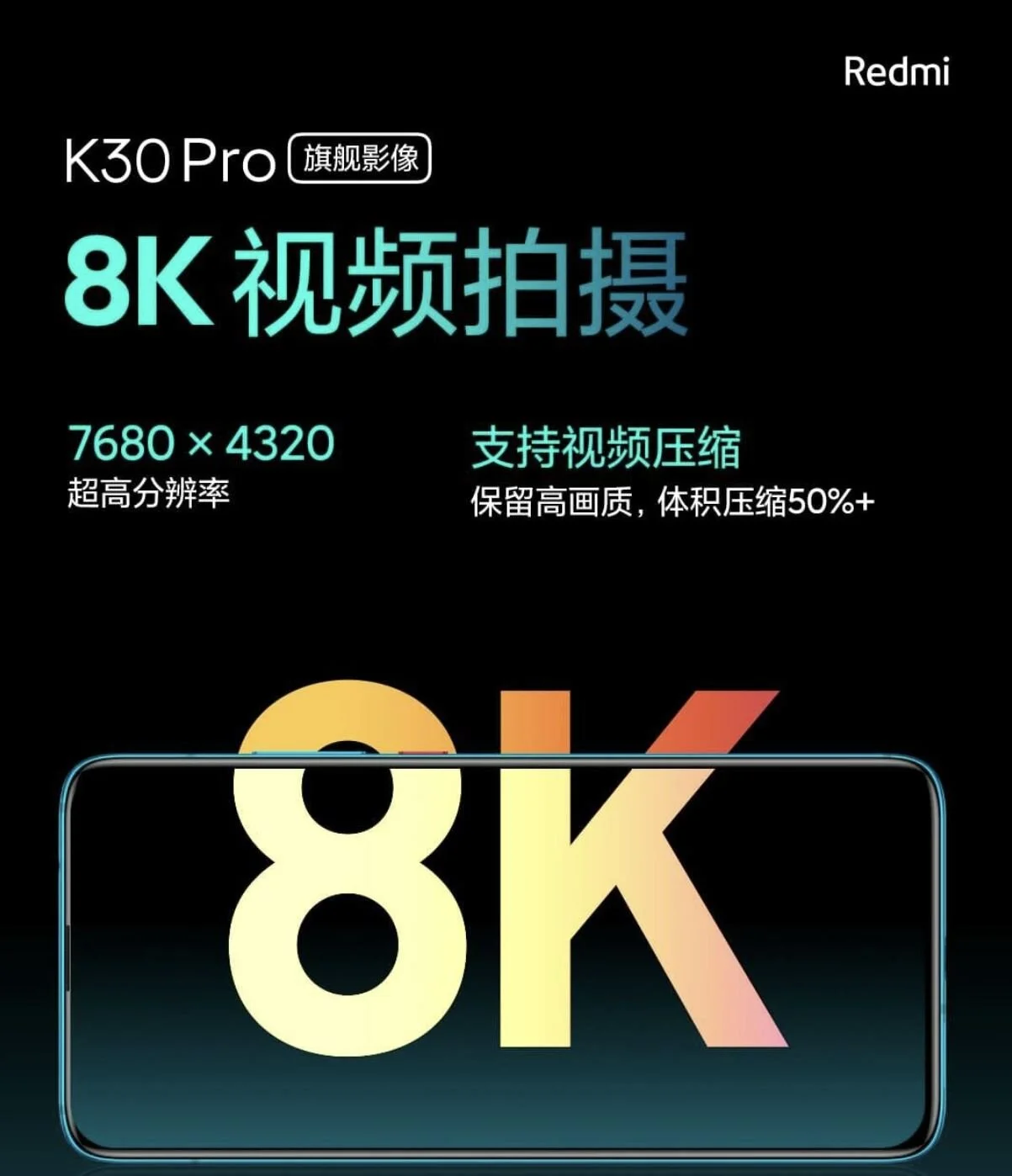
Firstly, both have trade-offs in the display department. While the K30 Pro may feature the brighter display, surpassing even most recent flagships, the Realme x50 Pro manages to sport the 90Hz display we so desperately wish Redmi would have included. On the camera department, while both feature similar specs, the K30 Pro’s 8K video recording capabilities are simply amazing, and blow the Realme’s 2160p video out of the water.

But if RAM is what you look for in a phone, the Realme x50 Pro features up to 12GB of RAM, beating the K30 Pro’s 8GB, meaning that paired with the same 865 chip-set, the x50 Pro manages to come out on top for those who really need the best performance out of their phones.

DXO_0026.jpg

K30 Pro VS Realme 6 Pro

realme.jpg

Making rounds on the internet as the future go-to budget phone, the Realme 6 Pro has certainly given the company some name, especially in Europe. But at only 500 yuan cheaper than the K30 Pro, it doesn’t offer anywhere near as nice of an experience.

Firstly, the Snapdragon 720G chipset is much slower than the 865, making this phone not as nice for anyone looking to game on the go. Secondly, its display is nearly 3 times dimmer than the K30 Pro’s 1200 nit display, coming in at only 480 nits. Lastly, though its photo camera may boot similar specs as the K30 Pro, its video capabilities are far from comparable. Not being able to film even at 4K resolution, the K30 Pro is miles ahead of the curve, offering even the most casual of video-takers an overall better experience for only an extra 500 yuan.

To the Realme 6 Pro’s defence, it does feature a 90HZ display, making us really think that Redmi dropped the ball by excluding this one very modern feature. Nevertheless, for better performance, a brighter display and much better video recording capabilities, spending the extra 500 yuan will not only get you a better phone - but one that will last for years to come too.

K30 Pro VS Mi 10 Pro

yw7qncTNbAHraxyhMz6z6H.jpg

The Xiaomi Mi 10 Pro is the company’s flagship device, featuring the best that the company can offer - so where does the K30 Pro compromise? Not a lot! Both feature the same 6.67 inch display size, with the same HDR10+ technology - but unfortunately, whereas the Mi 10 Pro features the smooth and modern 90hz refresh rate, the same cannot be said about the K30 Pro.

On the processing side, both phones feature the Snapdragon 865 chipset, offering the same speedy performance. The compromise in terms of performance can only be found in the RAM department, because whereas the Mi 10 Pro offers both 8GB and 12GB RAM configurations, the K30 Pro only offers 6GB and 8GB versions.. This is a minimal difference, but could be a factor that drives power-users to pick the Mi 10 Pro over the K30 Pro.

On the camera front, the K30 Pro features a 64 MP main sensor, whilst the Mi 10 Pro offers a 108 MP sensor. Though this may sound major on paper, not many modern social media apps can take advantage of such high pixel account, defaulting to the average 12 MP found on most smartphones more often than not.

As it may be clear by now, the K30 Pro, even when compared to Xiaomi’s flagship phone, only compromises on features that most users may not even notice - this is impressive, specially when you consider the price difference between the two products. Starting at 4999 yuan, the Mi 10 Pro is 2000 yuan more expensive than the K30 Pro, which starts at 2999, all while offering 90% of the same experience.

K30 Pro VS Nubia Red Magic 5G

With a price that is close to 4000 yuan, the Red Magic 5G must offer a lot more than the K30 Pro, right? No. Featuring the same processor, a similar camera system, and a smaller, dimmer screen, the reasons to opt for a Red Magic 5G over the K30 Pro are few and far between.

First, it can feature up to 16GB of RAM, but by then it costs more than Xiaomi’s flagship smartphone! Secondly, and perhaps the only real advantage that most users may see a use-case for, is that like the Mi 10 Pro, the Red Magic 5G also features a higher refresh rate, in this case, an impressive 144HZ!

But for the extra 1000 yuan, we reckon that the bigger, brighter display and 8K video functionality may be more useful in the day to day life than the smoother screen experience on what is ultimately a dimmer and smaller viewing experience.

With these three phones compared, the K30 Pro simply crushes its competition! Even against phones nearly twice its price, it offers 90% of the same experience, making any extra money spent an unneeded investment, For these reasons, we think the K30 Pro may be one of the most impressive budget/mid-range phones we have seen in a while, and can’t wait to get our hands on it!

Want to watch a video version of why the K30 Pro will be awesome? Click here

Want to read more about the K30 Pro? Click here

Redmi K30 Pro Specs That Matter And A Shocking Price

The Redmi K30 Pro was launched today in China and the specs of the Redmi K30 Pro are quite shocking for the price. We are going to cover some of the specs that matter for the Redmi K30 Pro. and finally some of our thoughts.

Screen:

Now the Redmi K30 Pro is quite a controversial device because unlike the base variant of the Redmi K30, the Redmi K30 Pro doesn’t have a high refresh rate screen. This is what the Redmi K30 Pro’s screen has:

  • The Redmi K30 Pro has a 92.7% screen to body ratio which is in the top of it’s class.

  • The screen of the Redmi K30 Pro is a 6.67 inch Samsung E3 display

  • The Redmi K30 Pro screen gets bright, really bright, like 1200 nits peak brightness which is on par with the current iphone.

  • HDR 10+ comes on both models of the Remi K30 Pro

  • 180hz touch sampling. This means the Redmi K30 Pro screen is reading you finger movement 3 times per picture generated by the GPU.

Cameras:

  • The main camera of the Redmi K30 Pro is a a 64MP Sony IMX686 primary sensor with OIS

  • An super wide ultra wide camera with 13MP Ultra wide-angle 123-degree FoV lens

  • The K30 Pro can also shoot video with it’s an 8MP telephoto/ macro lens with OIS.

  • A depth sensor for portrait photos

Battery:

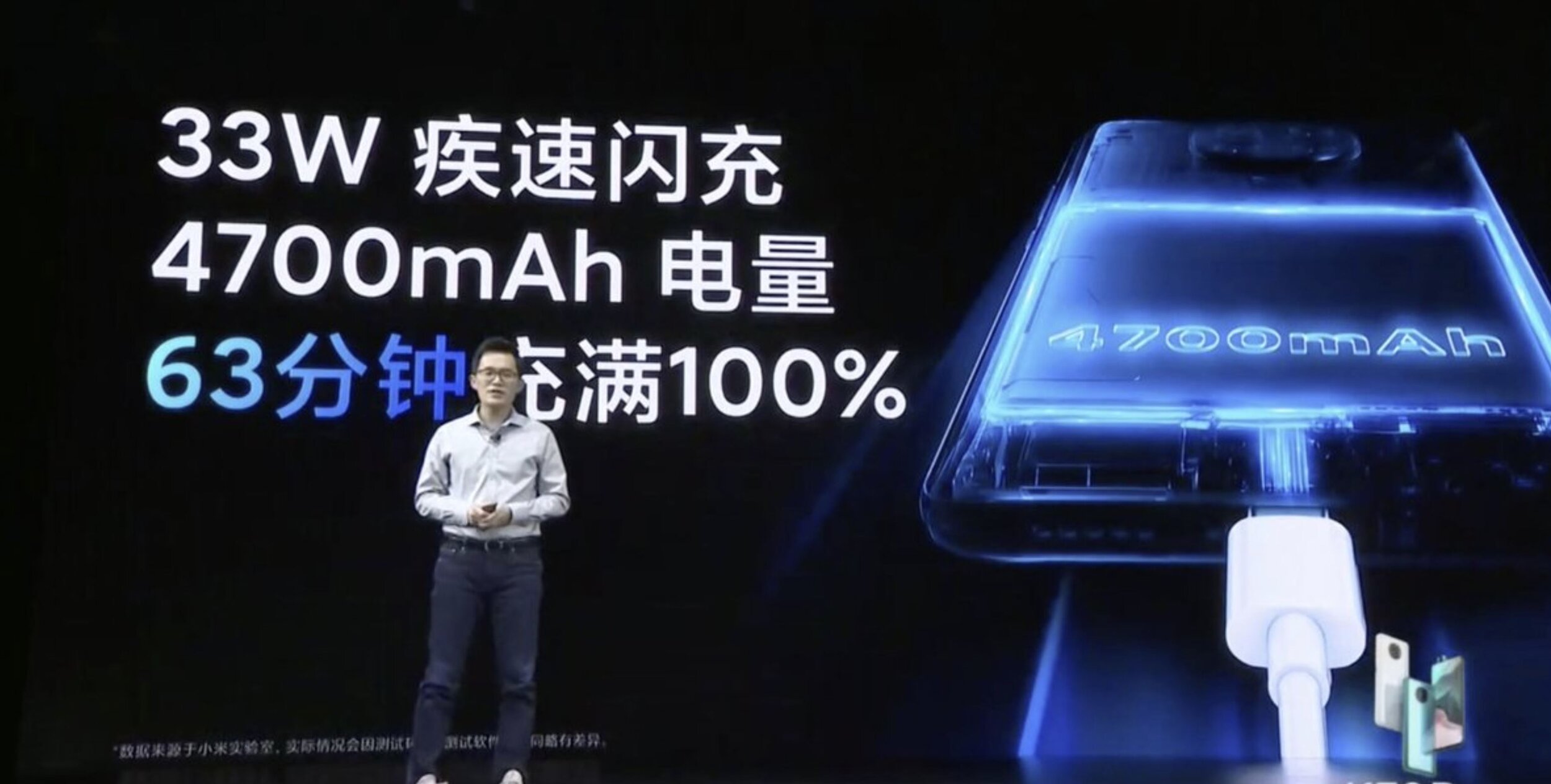
  • The Redmi K30 Pro should get excellent battery life with its 4700mah battery

  • The device will ship standard with a 33w charger in China. The Redmi K20 Pro was able to utilize the Xiaomi 27W wired charging so the Redmi K30 Pro is an improvement but not flagship level

  • Redmi claims that the Redmi K30 Pro will go from 0-100% in one hour and 3 minutes

web 4.JPG

Final Thoughts On The Redmi K30 Pro

The Redmi K30 Pro is Redmi’s attempt at making compromises that most users want for their everyday smartphone. Many recent studies suggest that people are often unable to tell the difference between the high refresh rate display and a 60hz panel. Xiaomi have leveraged this and given us a device with specs that people can tangibly grasp. Like the cameras. Overall I think this smartphone is an excellent choice for most people and a big upgrade to the already good K20 Pro.

The Redmi K20 Pro GCam Port We Have Been Waiting For....

There are many reasons to want Gcam for your Xiaomi Mi 9T Pro and the Redmi K20 Pro. The Redmi K20 Pro came equipped with the flagship Sony IMX 586. This sensor on the Xiaomi Mi 9T pro is able to produce amazing images as long as it has the right software. This Gcam Mod from Urnyx does a lot for the Redmi K20 Pro. This Gcam mod makes the Xiaomi Mi 9T a powerhouse camera.

long-exposures-basic-1.jpg

You can download the Urnyx Gcam mod for the Redmi K20 Pro and the Xiaomi Mi 9t Pro here

The Redmi K30 Pro And Redmi K30 Pro Zoom To Launch With 2 IMX686 64mp Cameras

As leaks roll out about the Redmi k30 Pro a lot of things about the Redmi k30 Pro have already been revealed. The Redmi K30 Pro is going to have a 60hz Super amoled display. Even though the Redmi k30 and Redmi K30 5g have 120hz LCD, the Redmi k30 Pro is going to go in a different direction. If you want to read about our thought about the Redmi k30 Pro screen check out this article here.

csm_IMX686_aa80f55e8f.jpg

Another area the Redmi K30 Pro and the Redmi k30 and Redmi k30 5G will be different is their cameras. The Redmi K20 and Redmi k20 Pro had nearly identical cameras. The only difference between the Redmi K20 Pro camera and Redmi K20 camera was that the ability for the Redmi K20 Pro camera to record 4k60

30x Hybrid zoom

30x Hybrid zoom

The Redmi K30 Pro and Redmi K30 Pro Zoom is set to have a flagship camera arrangement. The three cameras on the Redmi K30 Pro and Redmi K30 Pro Zoom are set to compete with other flagship cameras currently being offered. It has been confirmed by Redmi on Weibo that the Redmi K30 Pro and Redmi K30 Pro Zoom Camera. The Redmi k30 Pro & Redmi K30 Pro Zoom is set to ship with 4 camera’s. We know that 2 of the camera’s will be the Sony IMX686 64mp camera. This emphasis on cameras could unseat the Xiaomi Mi Note 10 Pro as the best phone for most people.

The Redmi K30 Pro & Redmi K30 Pro Zoom will use one Sony IMX 686 for it’s main camera. Another area the Redmi K30 Pro & Redmi K30 Pro Zoom cameras will be different from the Redmi K30 & Redmi K30 Pro Zoom is that it will include OIS on not one camera, but the Redmi K30 Pro will have OIS on two camera’s along with EIS to give us a super steady video. The Redmi K30 Pro & Redmi K30 Pro Zoom telephoto camera will also feature OIS and give us up to 10x Hybrid zoom.

We are going to get an ultra wide camera with the the Redmi K30 Pro quad camera. The Ultra wide camera for the Redmi K30 Pro will not have OIS but OIS is less important on ultra wide angle cameras. What do you think the fourth camera on the Redmi K30 Pro and Redmi K30 Pro Zoom will be?

8k.JPG

Redmi K30 Pro Screen Will Be A Compromise

The Cheapest Snapdragon 865…

The Redmi K30 Pro is set release quite soon and a lot of people are wondering about the type of display the Redmi K30 Pro will have. The Redmi K20 Pro was a huge a success for Xiaomi Redmi. Redmi is trying to build on the success of the Redmi K20 Pro and with the release of the Redmi K30 Pro Redmi is hoping to build on that success. Part of the success of the Redmi K20 Pro was the notch free display. The Redmi K30 Pro is expected to build on the all screen display of the Redmi K20 Pro and we are expecting the Redmi K30 Pro to build on that success. But how could Redmi give the Redmi K30 Pro a high refresh rate display when the their flagship device, the Xiaomi Mi 10 and Xiaomi Mi 10 Pro, already has a 90hz Amoled display? If you don’t think screens are important, see how we ranked them in our Smartphones of 2019 article HERE

3.jpg
2.jpg

Components And Cost…

To expect that the Redmi K30 Pro will be the cheapest Snapdragon 865 device and it will ship with high refresh rate amoled display is absolutely ludicrous. The Redmi K30 Pro has one purpose and one purpose only, Redmi wants the Redmi K30 Pro to be the cheapest device on the market with a flagship tier processor. The Redmi K30 Pro is set to have more than just a flagship SOC. It has also been confirmed that the Redmi K30 Pro will feature UFS 3.1 storage. This means that the storage of the Redmi K30 Pro will in fact be faster than the storage on the flagship Xiaomi device, The Xiaomi Mi 10.

A Compromise We Can All Agree On

4.jpg
7.jpg

An option seemingly unspoken of by most tech outlets about the Redmi K30 Pro is the fact that we could see the Redmi K30 Pro come with a high response screen, at a normal 60hz refresh rate. What would this mean for the Redmi K30 Pro from a user experience standpoint? A lot actually. Touch input rate is generally tied directly to screen response rate but Xiaomi has implemented significantly higher touch response rate digitizers on a variety of devices including the Blackshark 3. The faster touch input allows the device to register your finger movement before it asks the GPU to create the screen. This means that the touch input and user experience on the Redmi K30 Pro in some ways could still be at flagship level, without incurring the extra cost of a high refresh amoled display. This would allow the Redmi K30 Pro to retain the title of the cheapest Snapdragon 865 device while also giving the Redmi K30 Pro a unique experience. This would be welcomed since devices like the Xiaomi Mi Note 10 come with a curved AMOLED display

The Tronsmart Spunky Beats Misses what makes Wireless Earbuds Great

IMG_20200310_083606.jpg

Truly wireless earbuds have been growing in popularity in recent years. Much of the hype for bluetooth earbuds after the Xiaomi Mi AirDots. It becomes easy to understand where that popularity for a product like the Redmi AirDots Or Xiaomi Mi Airdots comes from. With the recent release of the Tronsmart Spunky Beats however, it has become evident that some companies simply don’t understand the very appeal with this product category or what makes great bluetooth earbuds great, and what makes mediocre bluetooth earbuds….mediocre.

What Makes Wireless Earbuds Great?

To understand what makes the Tronsmart Spunky Beats a bad pair of earbuds, it is first important to understand what makes wireless earbuds great. After over a year of reviewing these products, we have nailed the appeal of this type of product into a few categories: Convenience, Design and lastly, Usability.

On the Convenience front, truly wireless earbuds must deliver an easy to access audio experience that can be easily portable. It’s important to recognise that users are giving up in a lot of areas when choosing wireless earbuds over their wired counterparts: Battery life, ease of loss and in some cases, audio quality. For this reason, successful pairs of truly wireless earbuds need to be compact - and that comes in both the ear pieces themselves and the carrying case.

As for design - it is pretty self-explanatory. Having unfashionable, or clunky ear pieces makes for an audio experience that often times feels as if it is bringing you down rather than creating the boundless freedom that the concept is known for. On the carrying case side of things, a case needs to strike a balance between size, features and battery life, as lacking any of these features creates a clearly unbalance experience.

Usability, though the last feature we are mentioning, is often what makes or breaks a pair of wireless earbuds. With this category, we make reference to the features packed into a pair of earbuds such as touch controls, charging methods and of course, audio quality itself.

Where the Tronsmart Goes Wrong

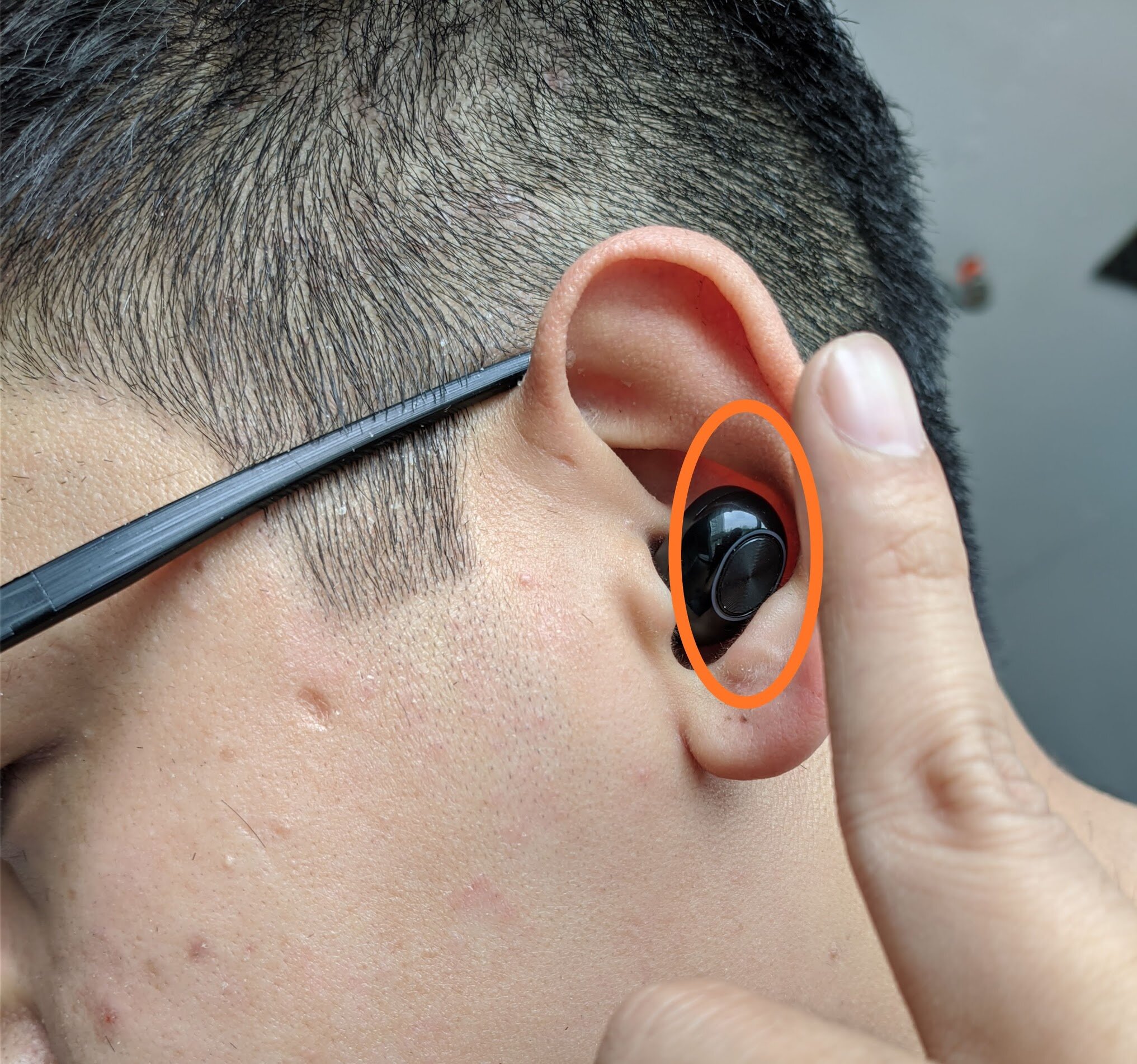
the touch panel is making contact with the earl, registering a touch

the touch panel is making contact with the earl, registering a touch

Having identified all that makes a truly wireless pair of earbuds good, now we can identify what makes the Tronsmart Spunky Beats bad: inconvenience of use, poor design and its unusable features - but what’s perhaps worst about these heavy words, is that they all come down to one very poor decision: making the headphones too small. Headphones being too small isn’t something that is unique to the Tronsmart Spunky Beat, but the Tronsmart Spunky Beat is the only pair of headphones that we have tested, that have powered themselves off due to size.

By going on the small end, the Tronsmarts are easy to lose, and are aided poorly by a carrying case that - whilst making the device more portable - give it no real substance. Another aspect to consider about the size of the Tronsmart Spunky Beat that most reviewers won’t notice, the shape of the Tronsmart Spunky Beat means that the headphone doesn’t st in the case correctly. What’s more, by being so incredibly small, the earbuds’ area for touch controls, an important part of this sort of device’s usability, is simply too limiting to be truly usable. What’s worse is that with other user’s sharing their concerns of the Tronsmart Spunky Beats having poor quality control, it leads me to believe that the touch control and touch input of the Tronsmart Spunky Beats could vary greatly.

This brings us to a question that we beg this product’s designers to ask themselves: Why would someone spend the extra money on a wireless pair when it does not include this sort of product’s main selling point: convenience? The main reason our pair of Tronsmart Spunky Beats has been left relatively unused is because of their inconsistent touch response.

As we’ve stated before, consumers are not interested in wireless earbuds because of battery improvements (wired headphones need not be charged and don’t consume as much from your phone’s battery), or even audio quality (despite being very similar, wired headphones can offer more audiophile qualities) - it’s purely for convenience. Want bluetooth headphones with great battery life, incredible microphone performance, and good sound? There are a plethora of neckband headphones such as the QCY L1 which Mitchell uses daily and reviewed here. and with that principle out the window, we feel as if the Tronsmart Spunky Beats simply misses the mark entirely.